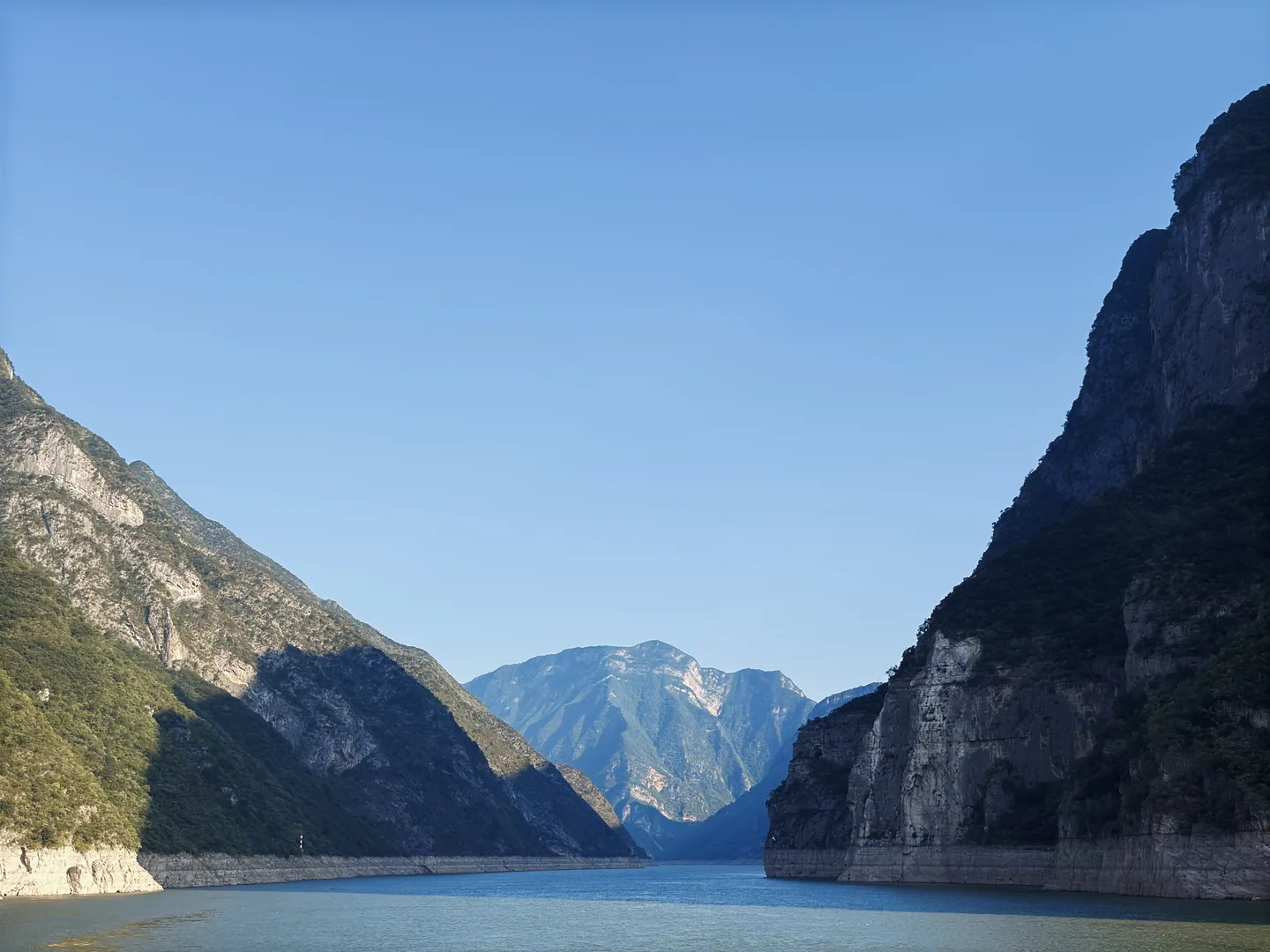
I had wanted to see the Three Gorges (三峡) for a long time. After Xingyi, when it was time to head home, I planned a route that would take me through them: Chongqing to Fengjie, a small red boat to Wushan, then another boat downstream towards Yichang, where I would catch a high-speed train home.
Part of the reason was a travel creator I liked on Bilibili, who had made the same journey. I’d watched it and wanted to do it myself.
I had never travelled by boat before, either, so I was as curious about the ride as about the scenery. And if you want to see the Three Gorges, the river seemed the obvious way to do it.
A short stop in Fengjie, then the little red boat
I travelled from Chongqing to Fengjie (奉节) in the morning, and by midday I was leaving again on the little red boat. Fengjie was only a short stop; all I really wanted was to get onto the river.
Fengjie is home to Baidicheng (白帝城), or White Emperor City, the departure point in Li Bai’s famous poem about a boat passing through countless mountains. I didn’t visit it this time. Still, there is something lovely about setting out on a river that has been making people want to write about it for so long.
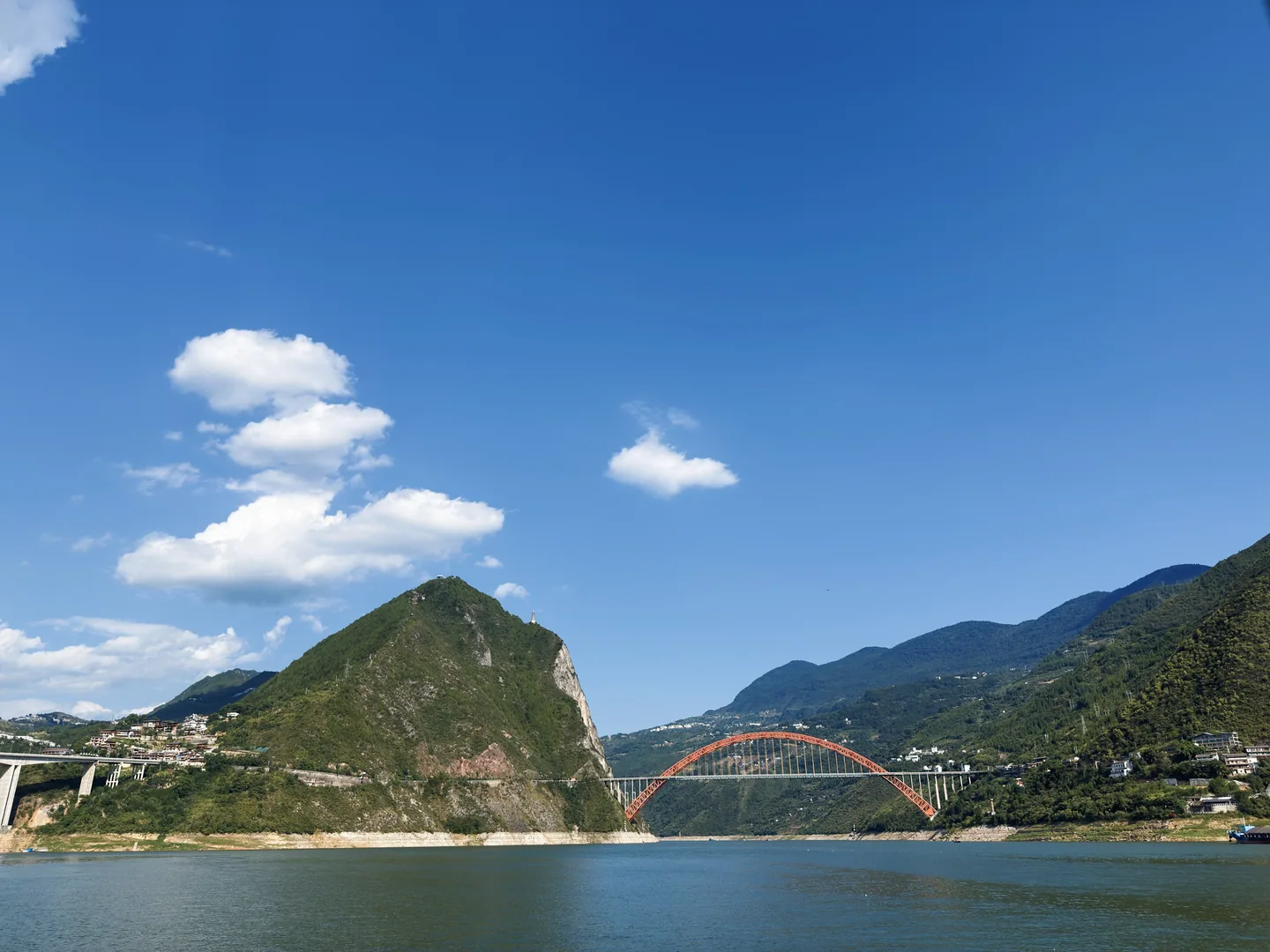
My ticket for the little red boat (小红船) cost RMB50, bought at the pier. I remember the ride to Wushan taking about two hours, though I’m less certain about the duration than the fare.
This was the part I’d been waiting for: the water right beside me, and the mountains sliding past. By the time I reached Wushan, the journey I’d watched on a screen had become my own.
One night in Wushan
I stayed in Wushan (巫山) for one night before continuing downstream the following day.
What I noticed first about Wushan was the motorcycle taxis. They were everywhere.
Wushan is also known for grilled fish. I was tempted, but a whole fish was more than I could finish alone, and I didn’t want to waste most of it, so I skipped it. That’s the downside of travelling solo.
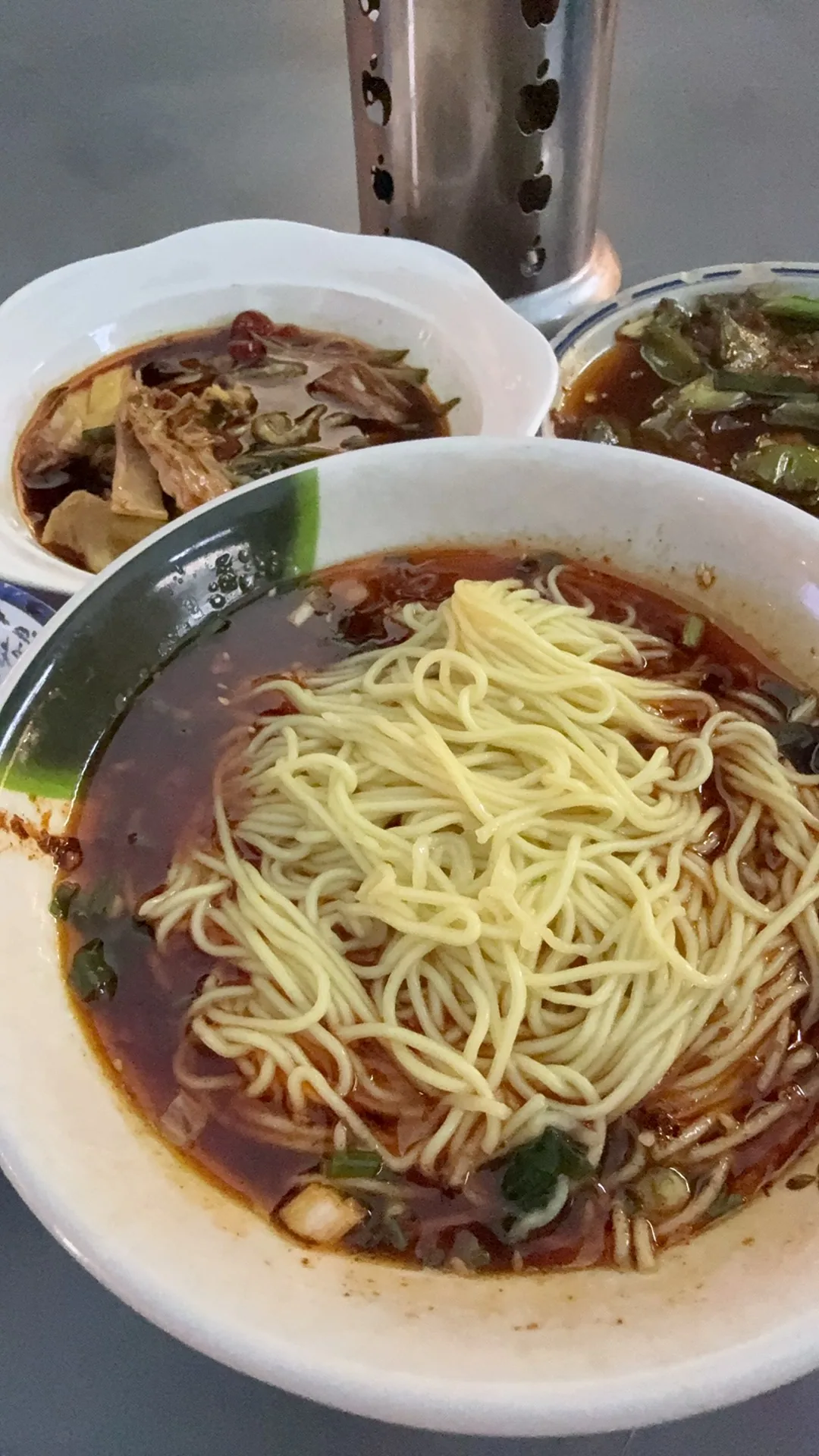
The meals I did have included Chongqing xiaomian (重庆小面), the city’s well-known noodle dish, and a Sichuan-style stir-fry of cured pork and sausage (腊肉腊肠双拼) with rice.
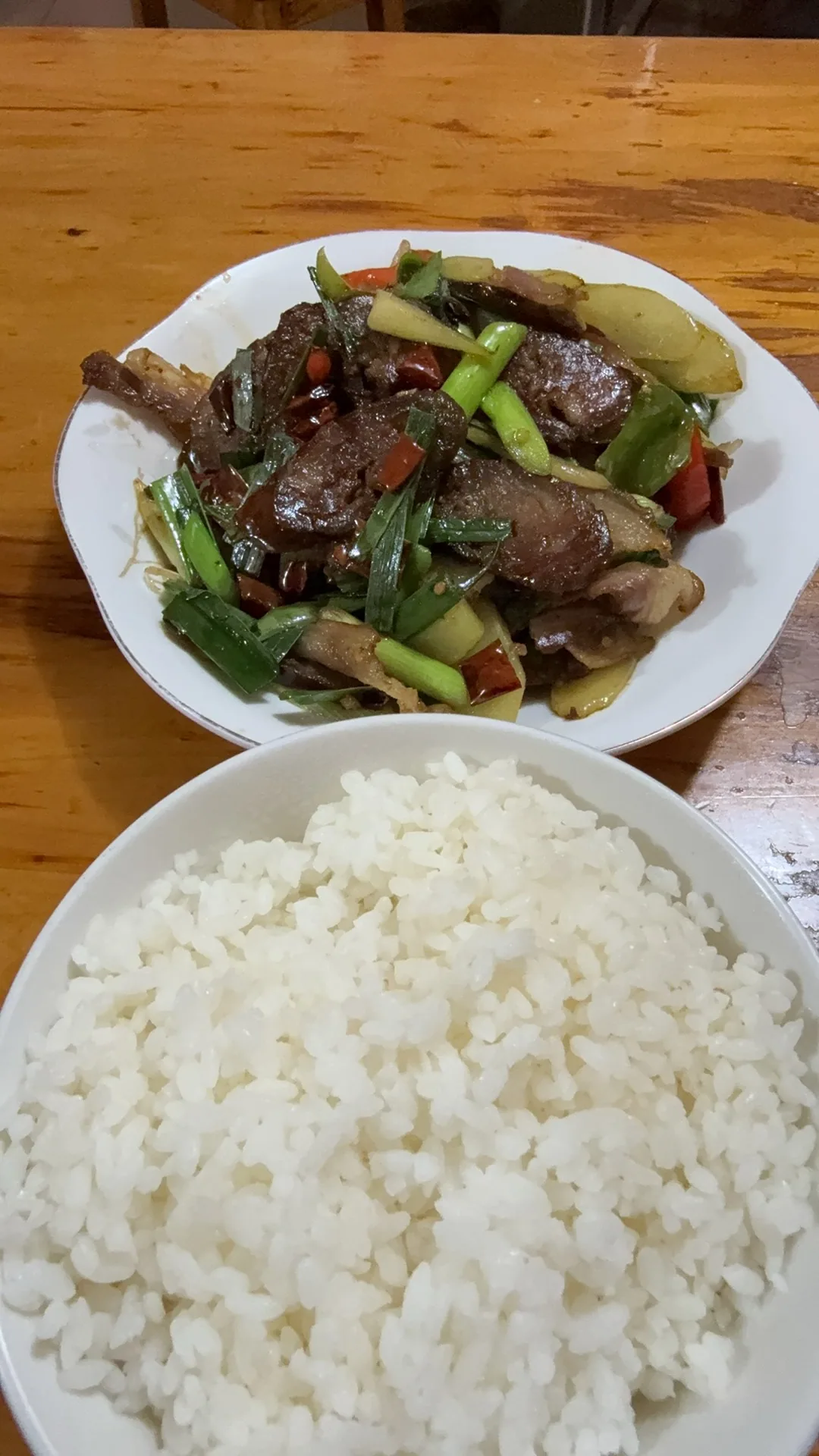
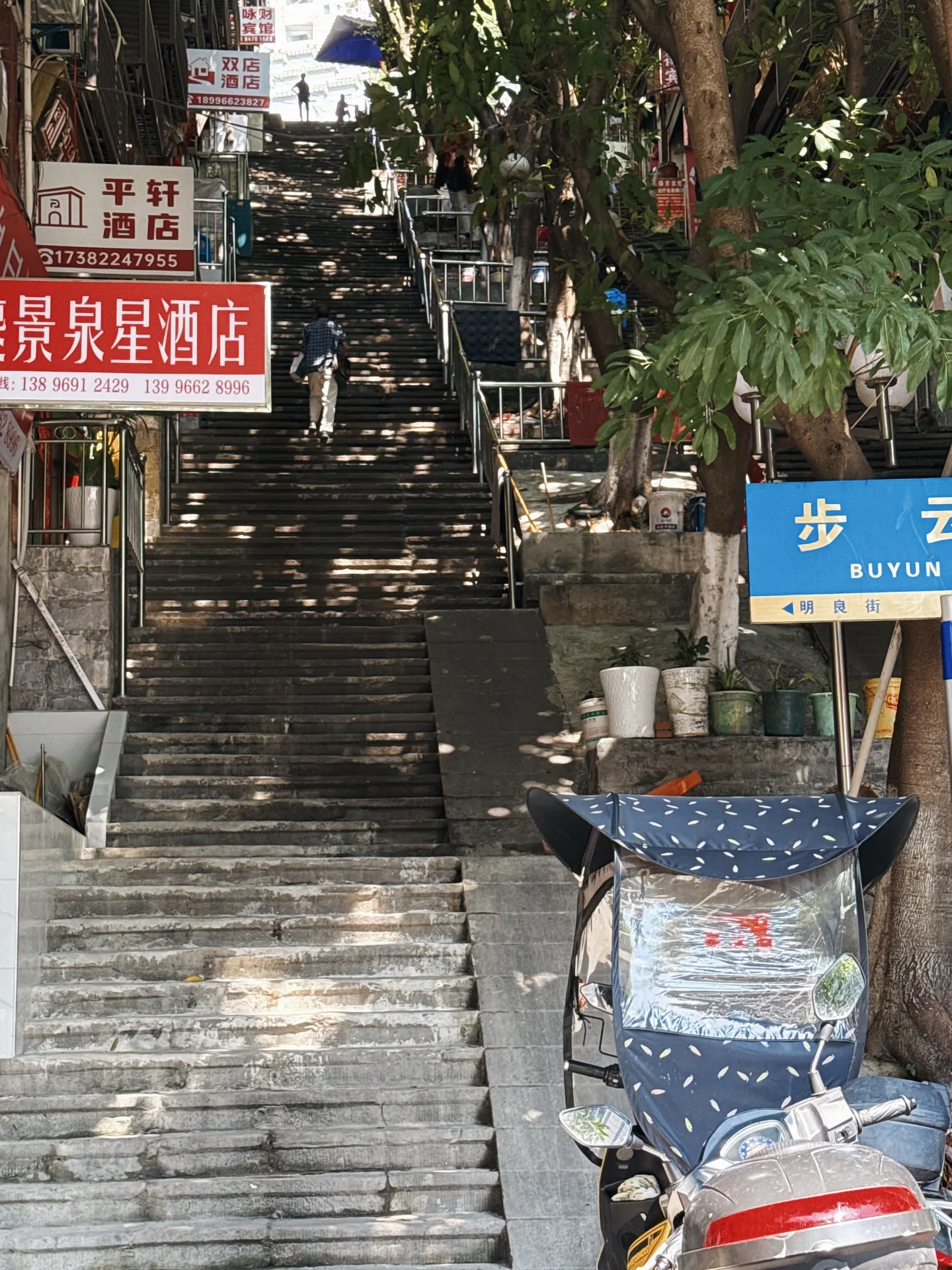
That evening, the owner of my accommodation told me there was a concert at Shennü Avenue (神女大道). I went along, and it was excellent.
Despite the name, Shennü Avenue is a long hillside stairway linking the lower and upper parts of Wushan, with escalators built alongside to make the climb easier. It says a lot about how this town is squeezed onto the mountainside.
That night, there were stage lights, a crowd and live music. I hadn’t expected anything like it from a one-night stop between two boats.
Afterwards, I headed down from Shennü Avenue. There were lots of snack stalls along the street, so I wandered through them before going back to my accommodation.
Downstream on Gaoxia Pinghu No. 5
The next day I boarded Gaoxia Pinghu No. 5 (高峡平湖5号) for the onward journey towards Yichang. The ticket cost two hundred and something yuan; I no longer remember the exact amount.
Out on the open deck, I could finally take in the scale of it. The slopes rose steeply straight out of the water, green in some stretches, great faces of pale rock in others, with one ridge appearing behind another down the river.
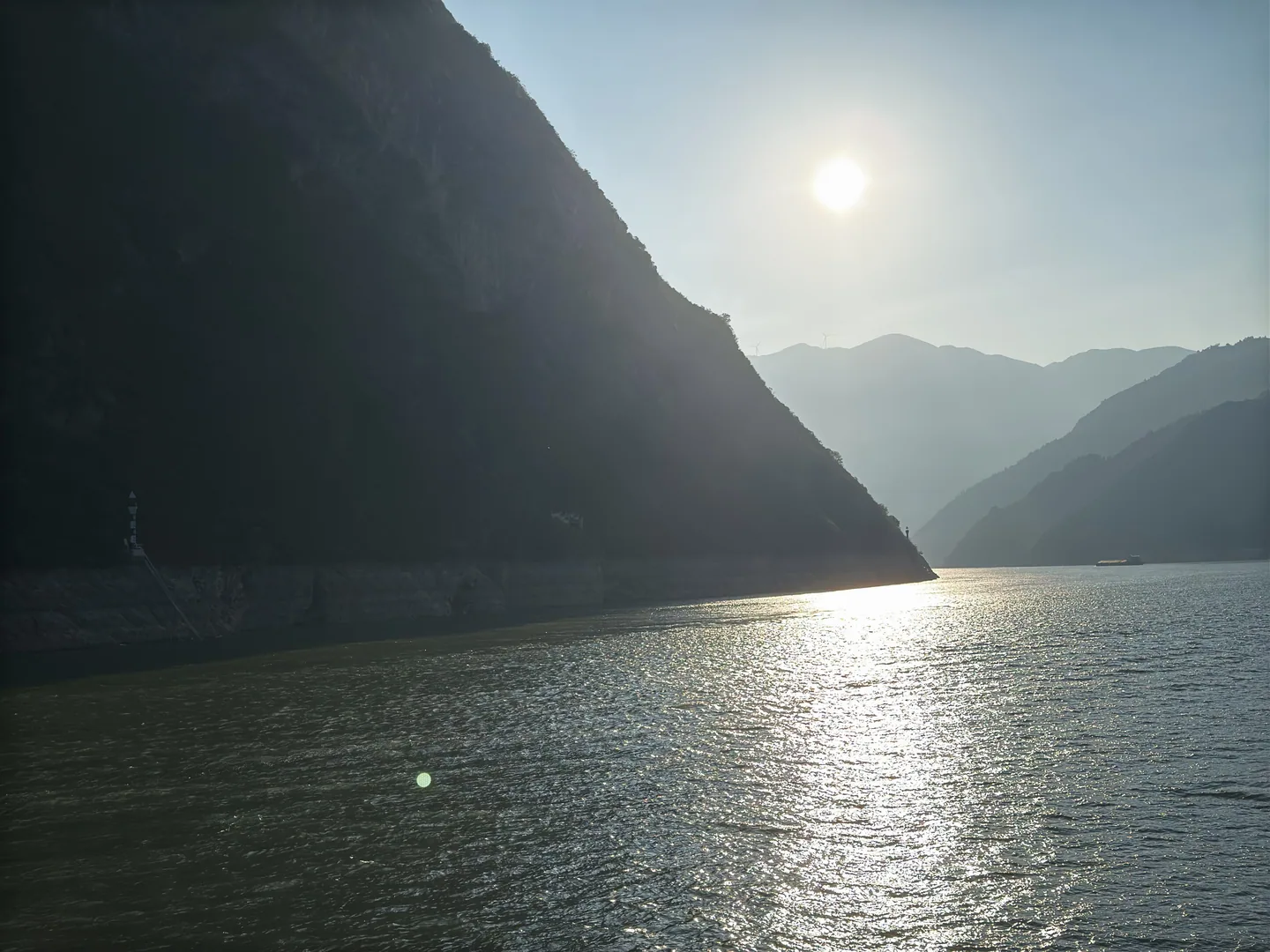
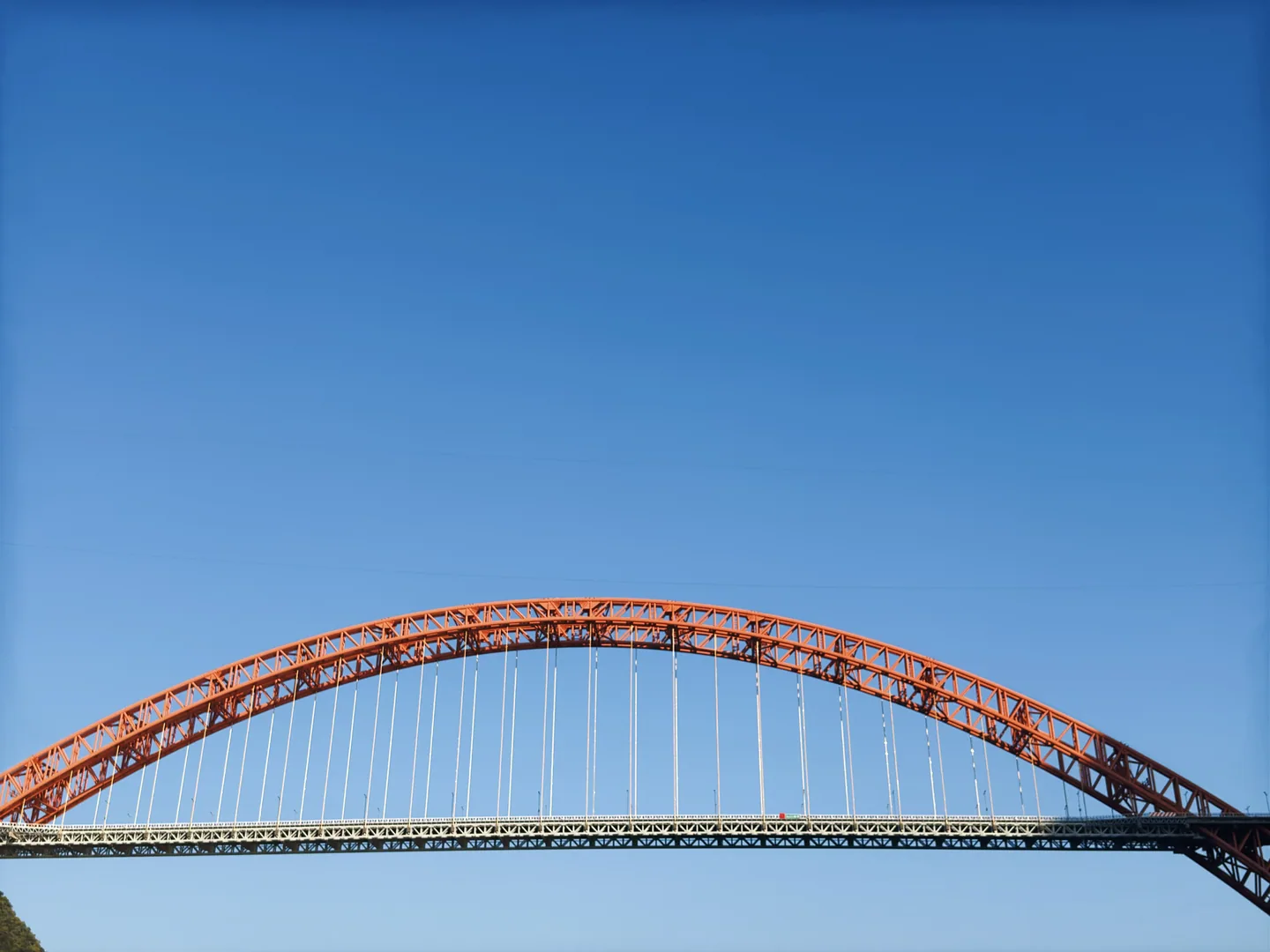
The morning light made it especially beautiful. Sunlight spread across the water while one side of the gorge stayed in shadow, and the mountains farther away grew softer and paler. Standing there, I knew I’d chosen the right way home.
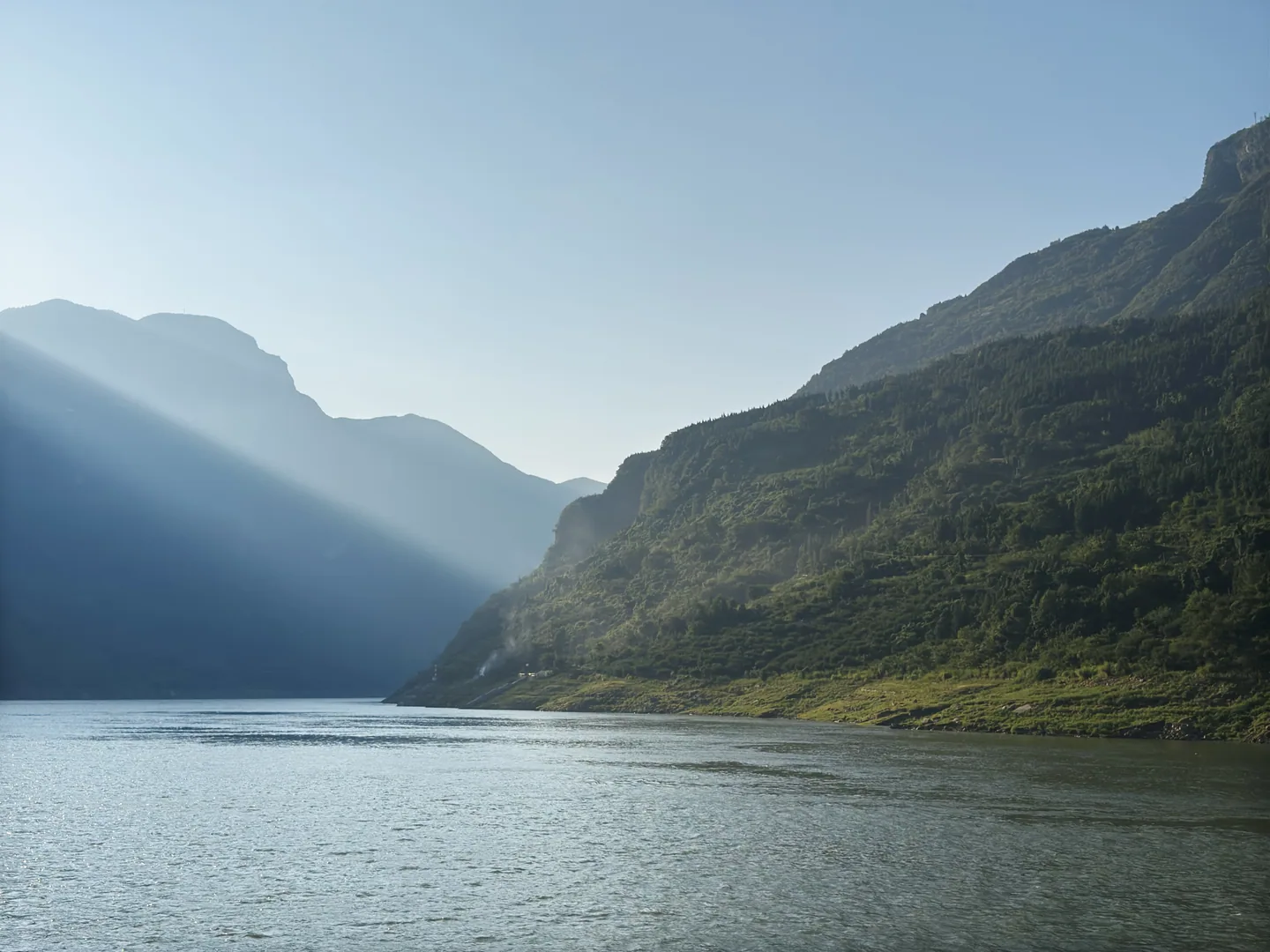
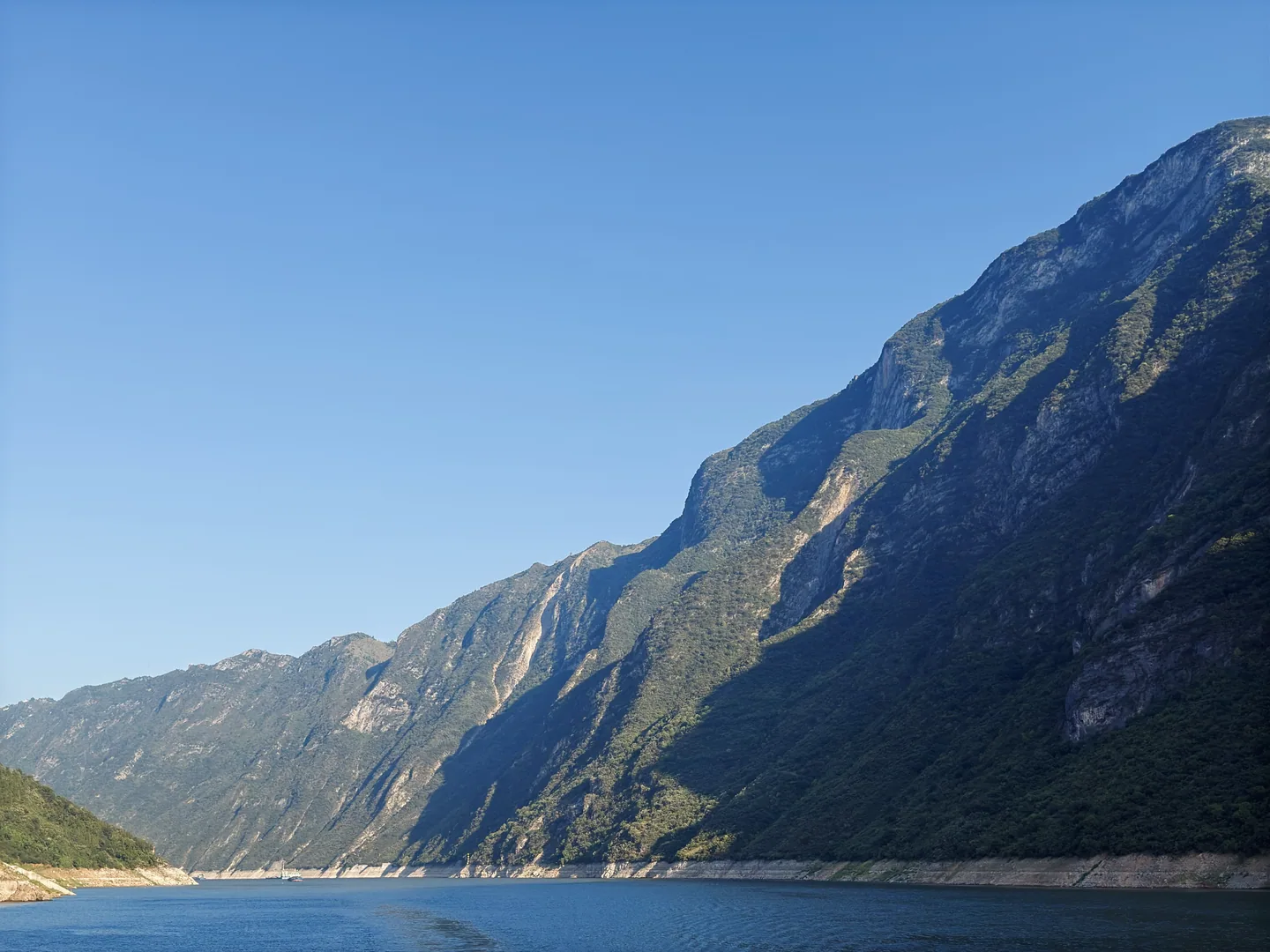
Another view of the high cliffs
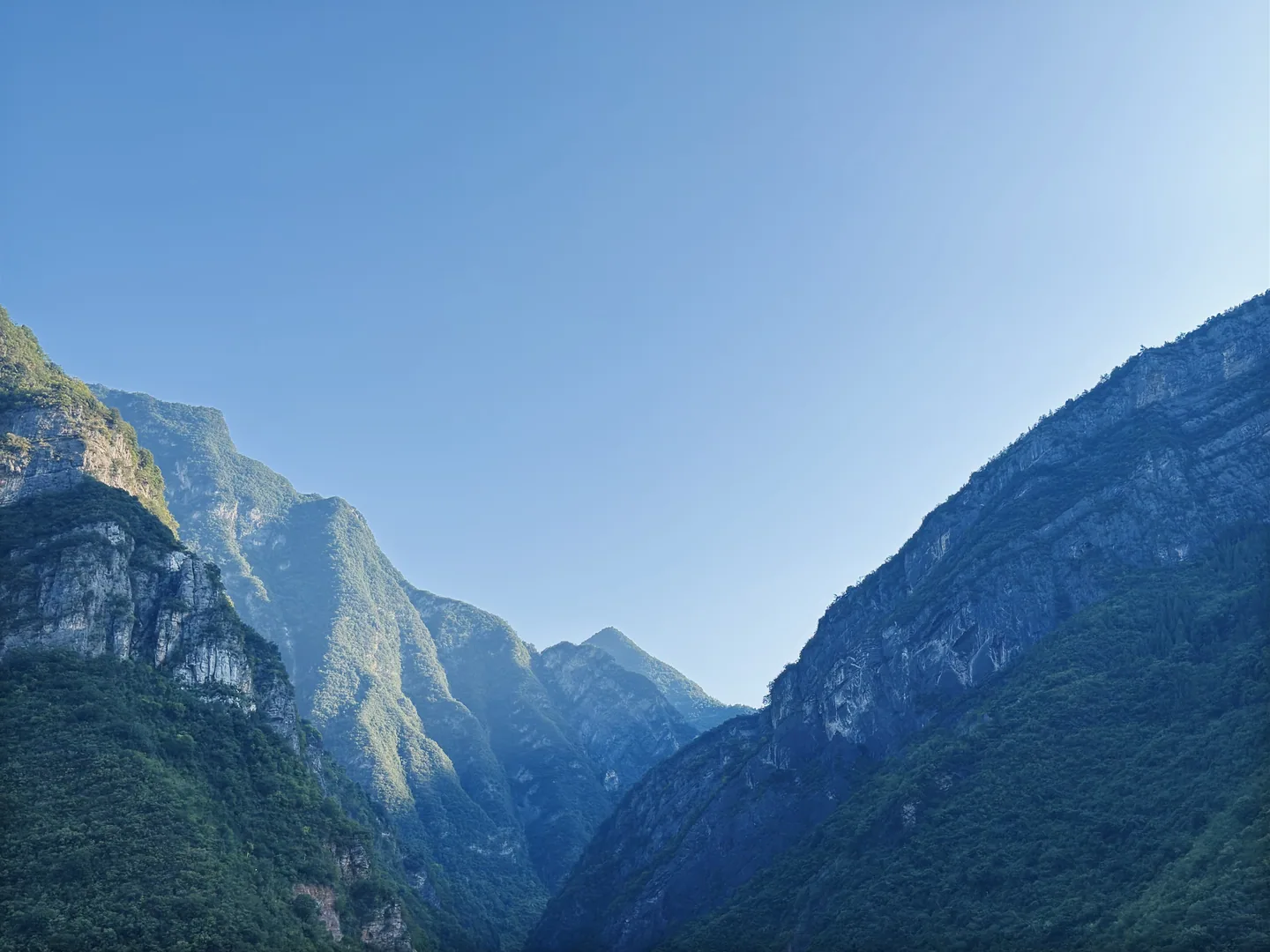
The name Three Gorges refers to Qutang Gorge, Wu Gorge and Xiling Gorge, along the Yangtze between Fengjie and Yichang. They belong to the same river journey, but each has a different character.
Qutang Gorge (瞿塘峡) is the shortest and is known for its imposing scale. At Kuimen (夔门), the cliffs stand close together like enormous stone gates, giving the river a dramatic entrance.
Wu Gorge (巫峡) is celebrated for its depth and graceful scenery: a long, winding valley with successive peaks often wrapped in cloud and mist. There is a secluded beauty to that landscape.
Xiling Gorge (西陵峡), towards Yichang, has rugged mountains and smaller gorges within the larger valley. Its old reputation for dangerous rapids belongs to an earlier era of river travel: channel improvements and the Gezhouba and Three Gorges projects changed those conditions. The dramatic mountain scenery remains.
I’d known these names for years. Now I had the mountains and the river to go with them.
The homes behind the scenery
There is a much more recent history behind these river towns, too. Construction of the Three Gorges Dam and the filling of its reservoir meant more than a million people had to move. Some resettled locally; others moved to different provinces. Homes, farmland, streets and whole communities were affected.
A million people is hard to picture. Each of them left somewhere familiar and started again somewhere new. Looking at the river and mountains, it’s easy to forget that this is part of the Three Gorges’ story too.
On to Yichang, then home
Near the end of the journey, the water opened out beneath broad clouds and distant mountains, and I saw the Three Gorges Dam (三峡大坝) near Yichang (宜昌). Its main purposes include flood control, hydropower and navigation.
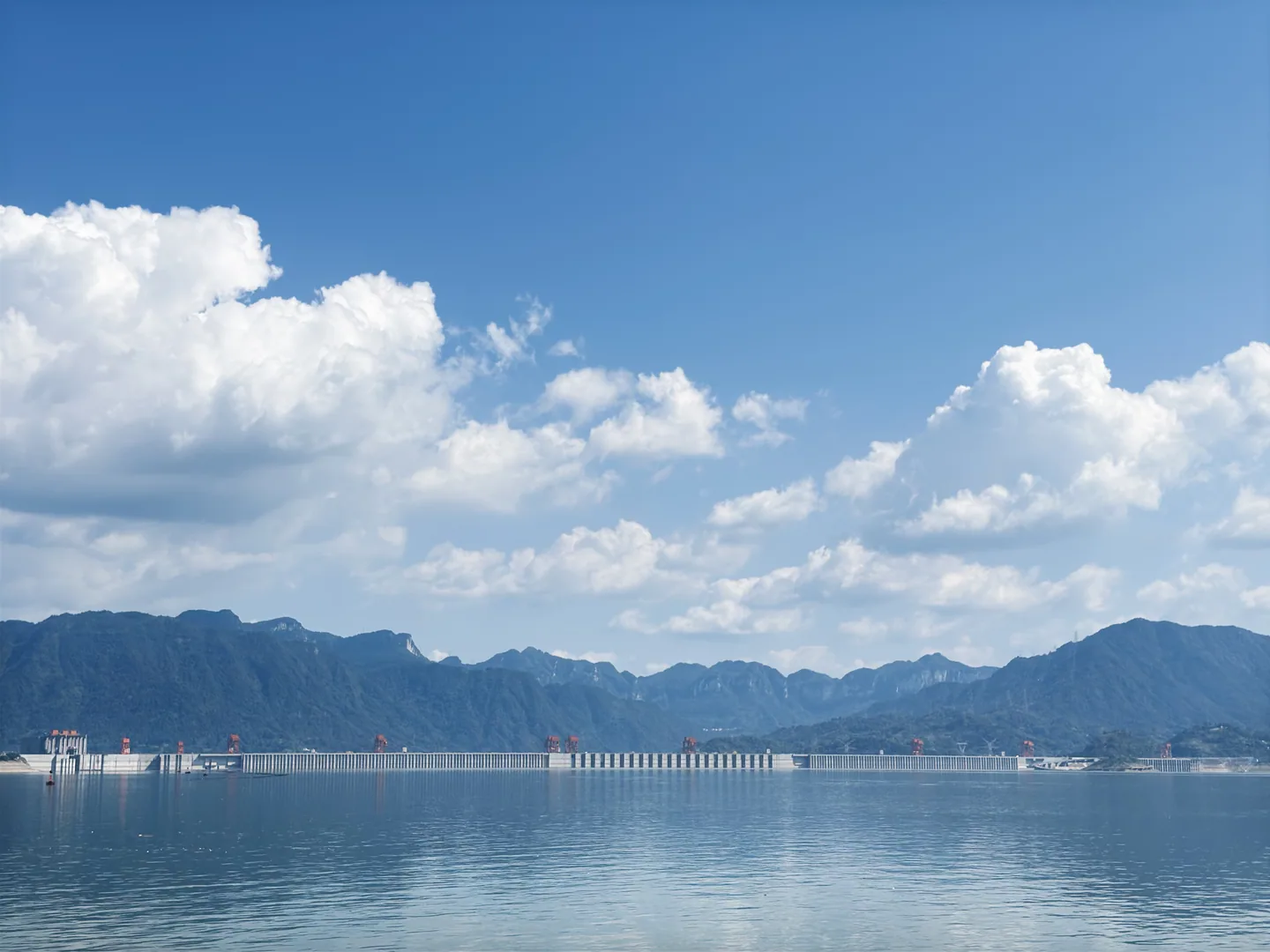
If the engineering interests you, ask about a cruise from Yichang that includes passage through the Three Gorges five-stage locks (三峡五级船闸). Water levels are adjusted in successive chambers to raise or lower the ship—like a big ship taking the stairs. The ship lift works like an elevator, so confirm which experience an itinerary includes when booking.
For food, I’d suggest Qingjiang fish (清江鱼). I like its springy flesh and the relatively few small bones; it makes a delicious meal. “Qingjiang fish” is a regional fish brand covering several species, so the fish served can vary.
And if you have more time, go and see Qingjiang Gallery (清江画廊) for me. I didn’t make it there on this trip. It is in Changyang, in the Yichang area, with boat trips through the river scenery—another stretch of water and mountains I would have liked to explore.
My own journey ended in Yichang, where I caught the high-speed train home. I’d wanted to see the Three Gorges for years, and my first boat trip took me right through them.
The fares above are what I paid on this trip in August 2026.
About this note
This note draws on my own travels and photographs and videos.
- Chongqing civil affairs: Qutang Gorge and Kuimen
- Chongqing planning bureau: the winding valley and peaks of Wu Gorge
- Yichang local history centre: Xiling Gorge and its changed rapids
- China Three Gorges Corporation: the project’s functions
- China Three Gorges Corporation: ship locks and the ship lift
- Ministry of Agriculture: the Qingjiang fish brand
- Qingjiang Gallery: official boat-trip routes
- Chongqing government: the Three Gorges, from Fengjie to Yichang
- Chongqing local history office: Li Bai and Baidicheng
- People’s Daily: Shennü Avenue and Wushan’s escalators
- Chongqing local history office: Three Gorges resettlement