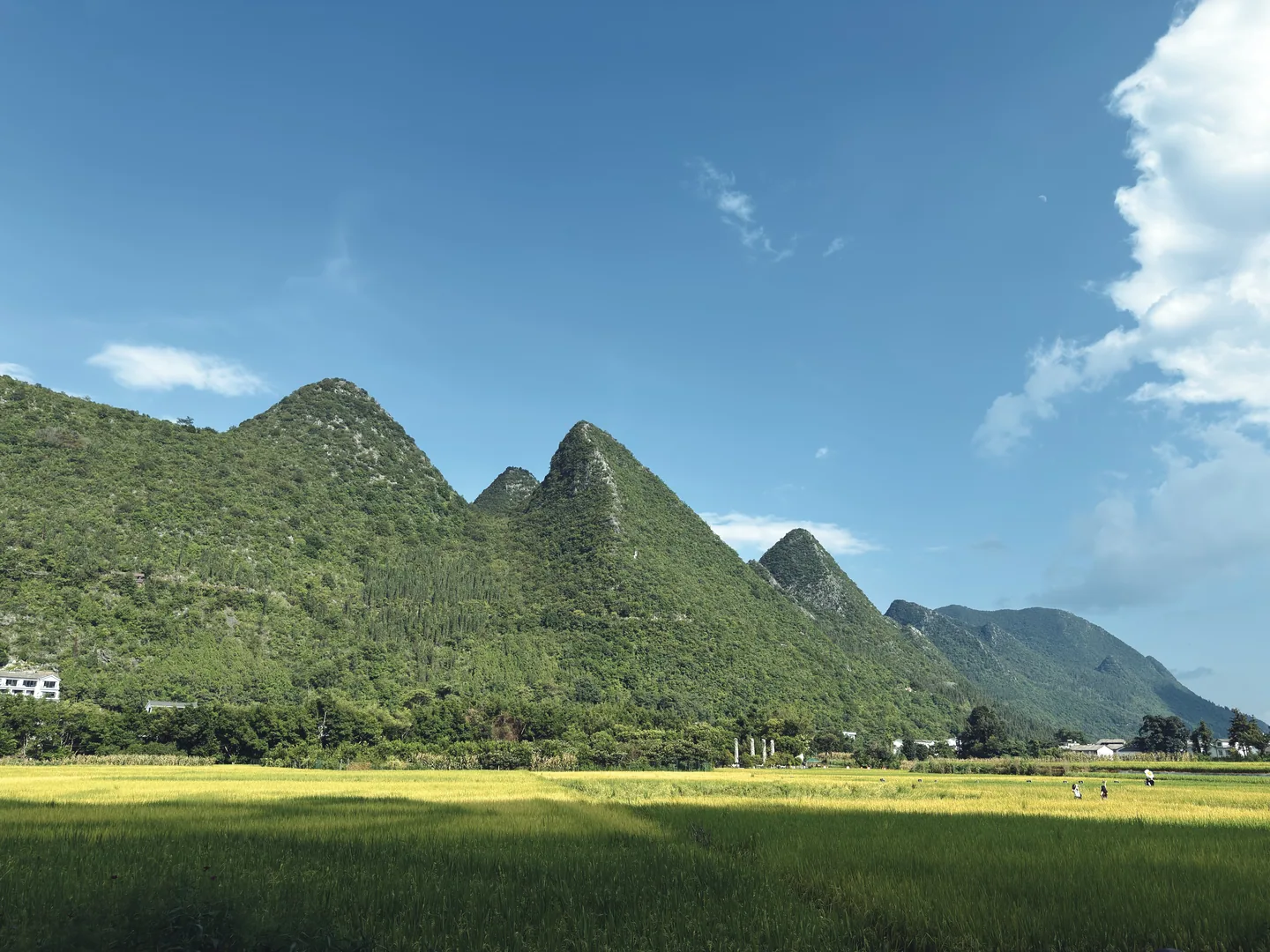
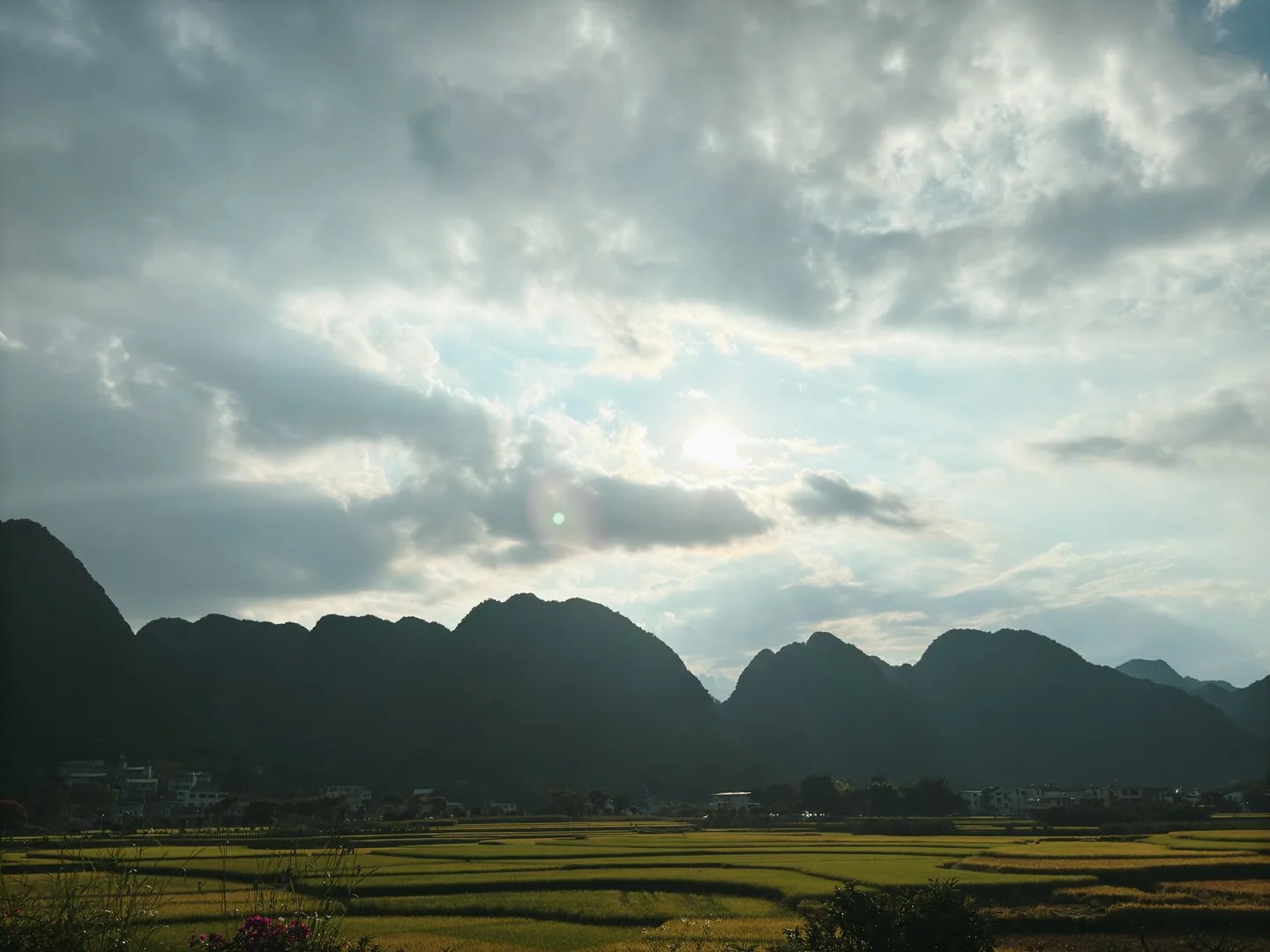
After two months beside Fuxian Lake, I spent three days in Xingyi (兴义), Guizhou. I stayed in a guesthouse among the villages of Wanfenglin, with rice fields and those steep, rounded peaks nearby.
At Fuxian Lake, I had loved the sheer expanse of water. Here, it was the space between the mountains: fields spreading out below them, houses at their feet, one row of peaks rising behind another. After two months by a lake, it was a completely different landscape, and a beautiful one.
A little background on Xingyi
Xingyi lies in southwestern Guizhou, near the meeting of Guizhou, Yunnan and Guangxi. It is the administrative seat of Qianxinan Buyi and Miao Autonomous Prefecture. The National Ethnic Affairs Commission’s city introduction explains that setting.
The mountains here are karst: limestone shaped over time by water. Wanfenglin’s cone-shaped hills and the deep cut of Malinghe Canyon are two striking expressions of that landscape, both described by UNESCO in its introduction to Xingyi Global Geopark. None of that is needed to enjoy it, though. The peaks really do look like a forest of mountains.
Staying among the villages of Wanfenglin
I should say upfront: I didn’t go into Wanfenglin’s ticketed sightseeing area. I stayed down among the villages, and everything here is from the villages and fields below. The ticketed route and its viewpoints are a separate visit.
It was more than enough. With the peaks right outside the guesthouse, the mountains weren’t something to go and see; they were simply where I was. The houses, narrow roads and fields gave them a human scale, with everyday life carrying on beneath all those extraordinary shapes.
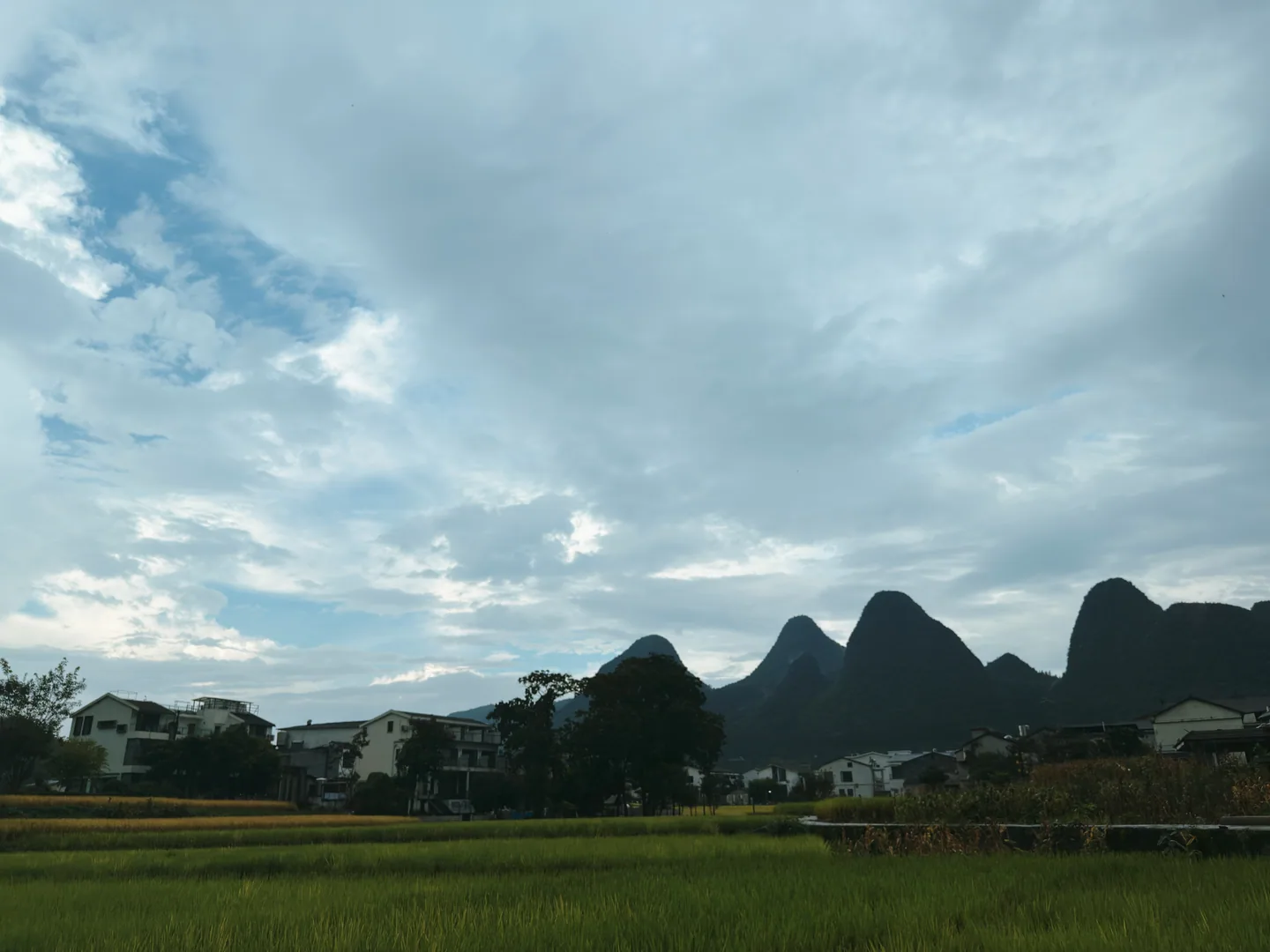
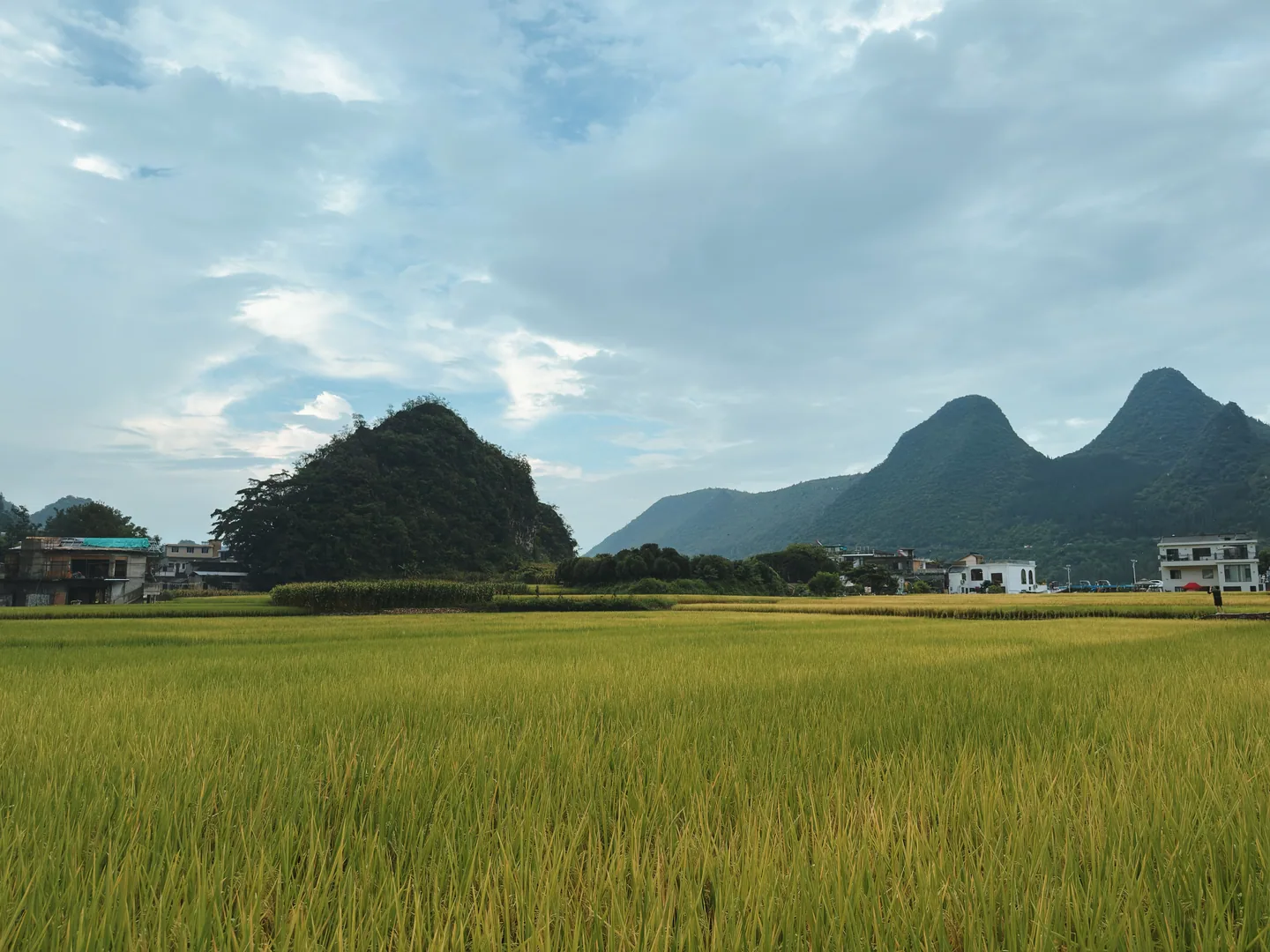
Around the guesthouse, scooters went by along roads lined with fields and flowers, with village buildings in front and the peaks behind.
Another short view from the road near my accommodation
Xu Xiake and a forest of peaks
Wanfenglin is closely associated with Xu Xiake (徐霞客), the Ming-dynasty traveller and geographer. He travelled through the Xingyi area in 1638 and wrote admiringly about the region’s densely grouped peaks. A Guizhou broadcaster’s account of his route connects his writing with the landscape around Xingyi. A famous line often attributed to him is used to describe Wanfenglin: “There are countless mountains under heaven; only here do the peaks form a forest.” The Guizhou culture and tourism department’s introduction tells that story. Accounts differ on whether he reached the area of today’s scenic site.
Standing in the fields, I understood the line straight away. There’s no single summit to look at. Your eye follows one pointed outline, finds another behind it, and another, until the distant ones fade into soft blue shapes.
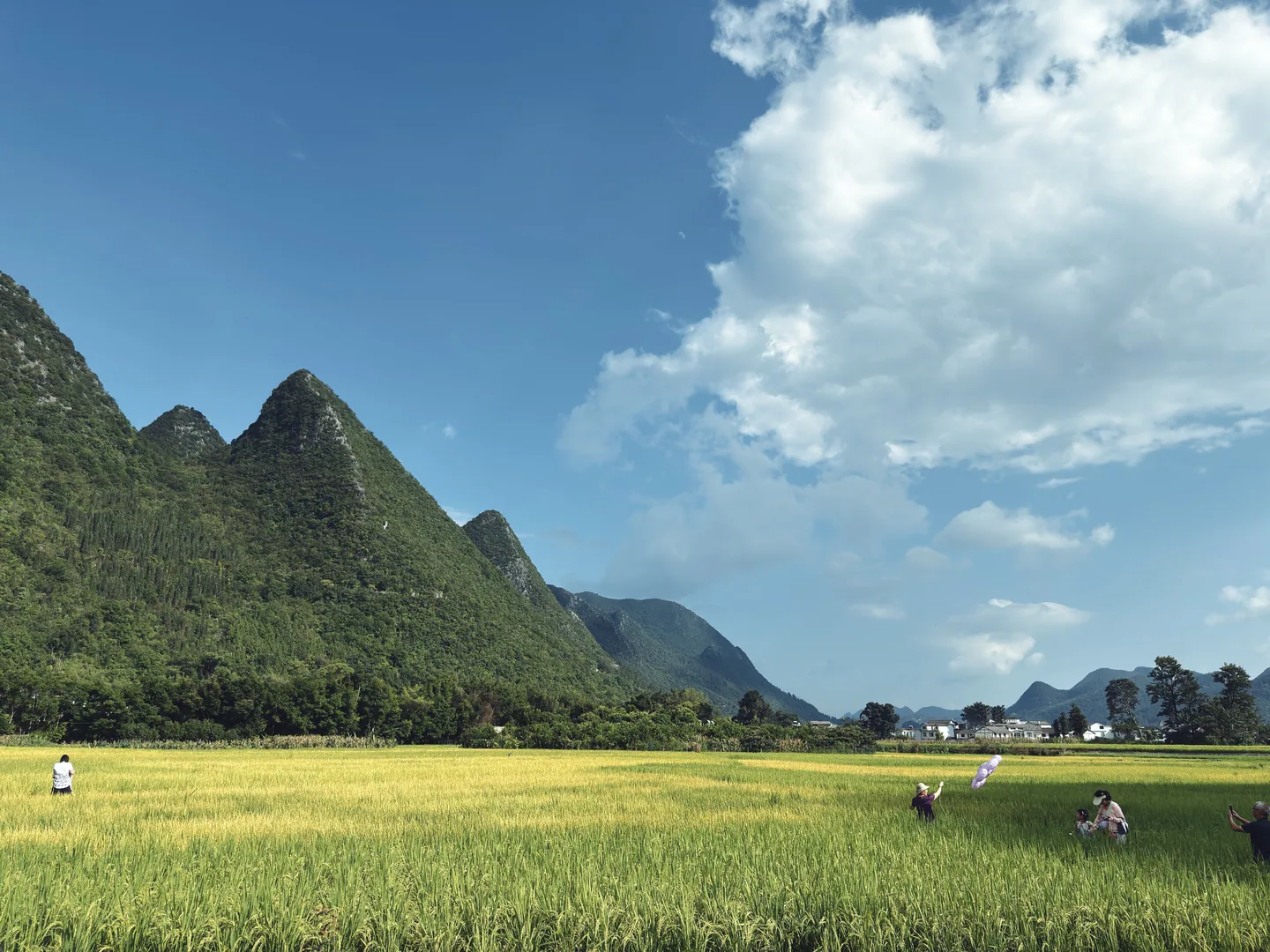
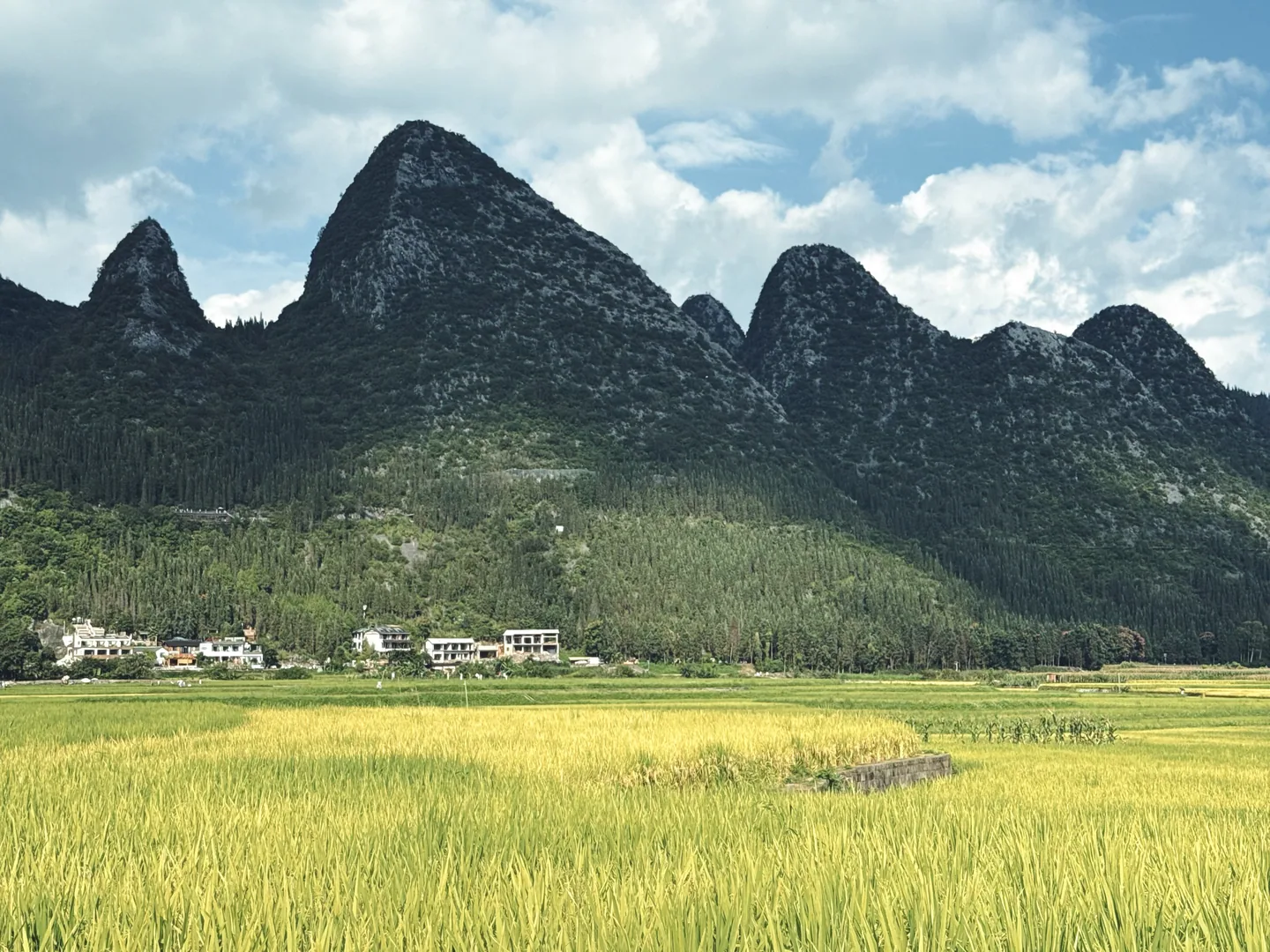
Rice fields, clouds and the late afternoon light
For me, it was the rice fields that made the scenery. The mountains had steep, dark sides, while the land below spread out in greens and yellows, with white houses along the edges. It was the whole view together that I found so beautiful.
There was always something to notice: a bright strip of light across the rice, a house tucked between hills, clouds gathering over the valley. The light kept picking out different fields while others stayed in shadow.
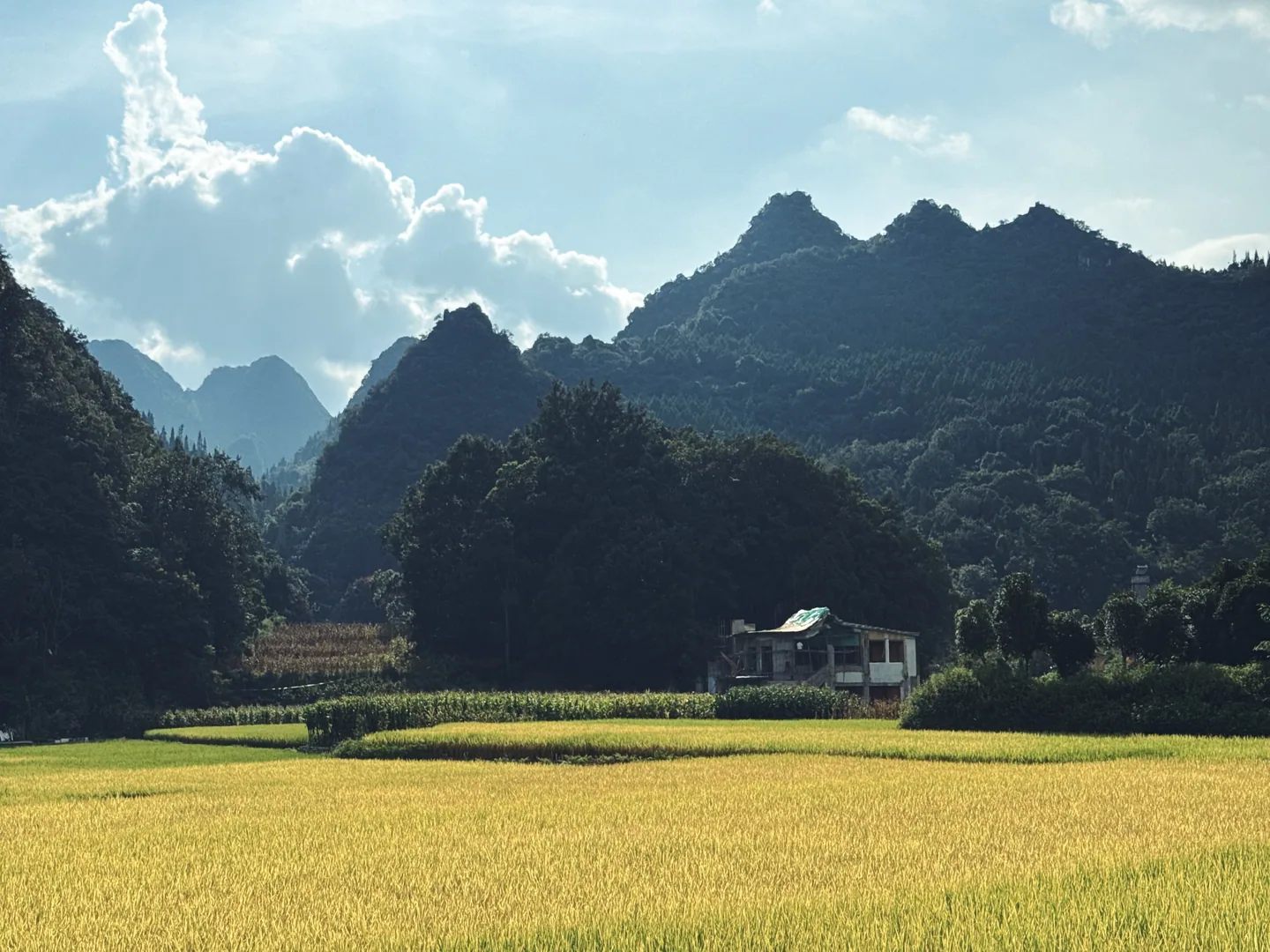
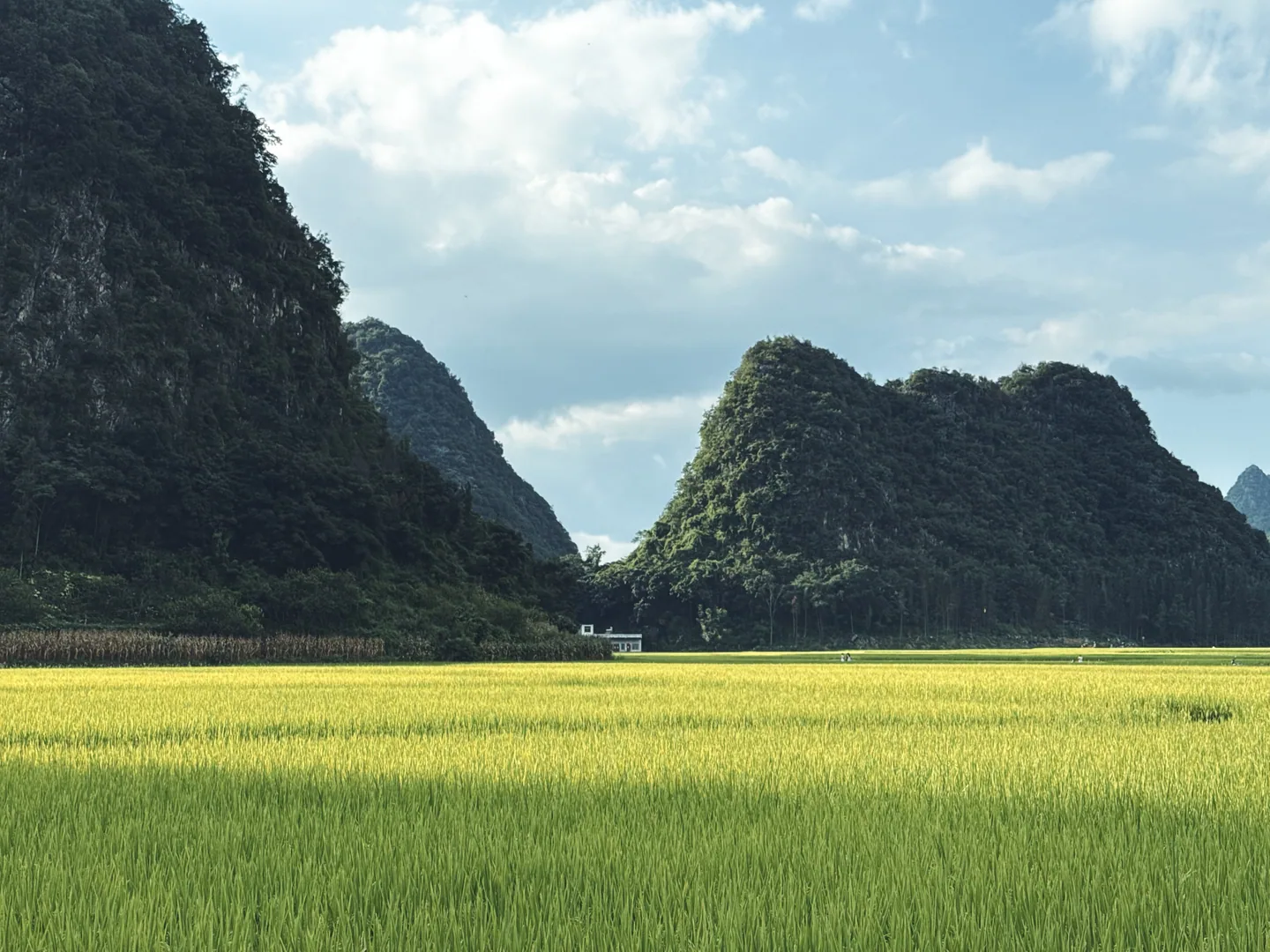
One more patch of afternoon light on the rice
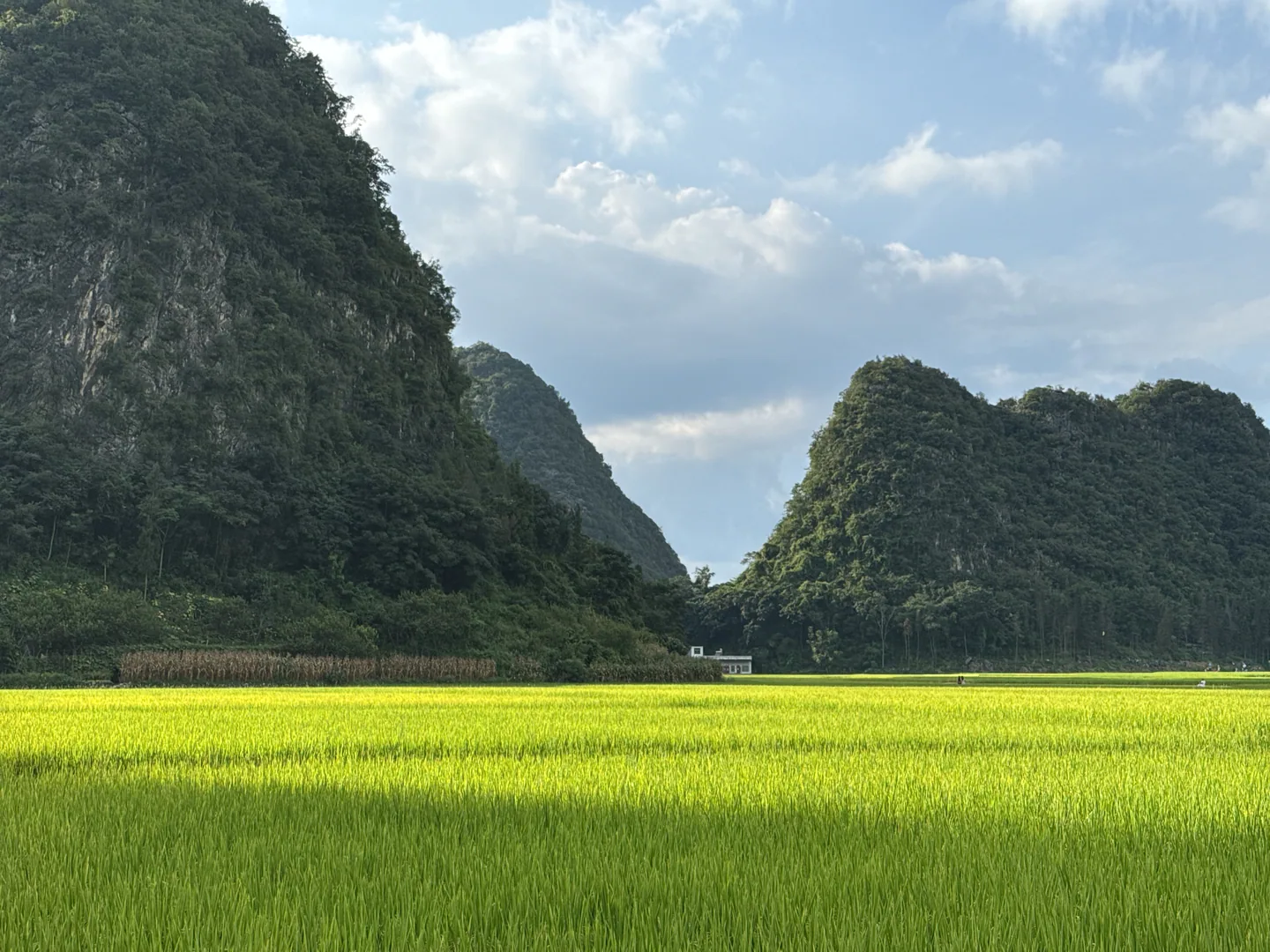
Up close, there were individual stalks of rice; farther out, the fields became a patchwork, and beyond them were layer after layer of mountains. After the open water of Fuxian Lake, I loved having so much to look at in one view.
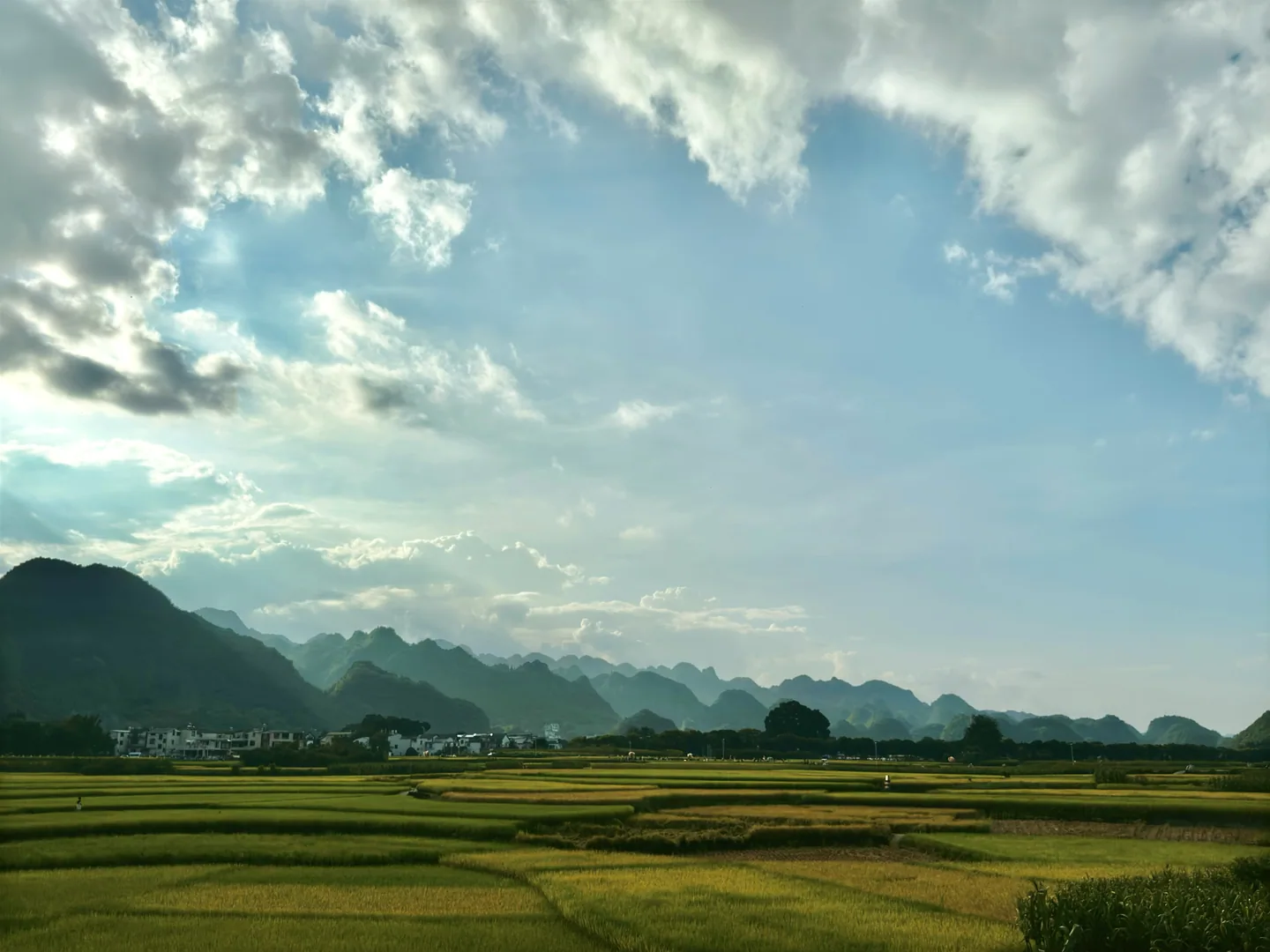
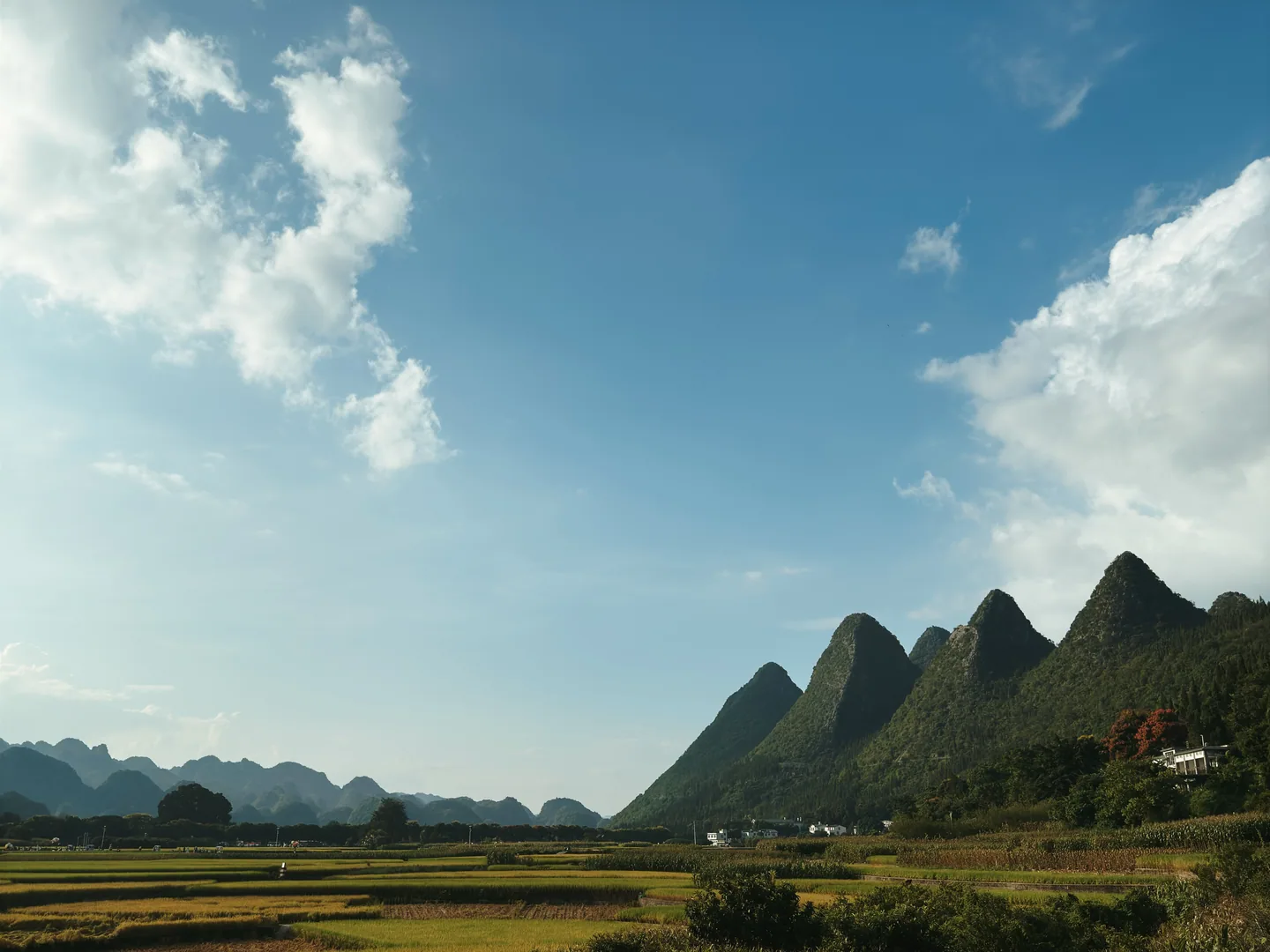
As the afternoon went on, the sky took over. Clouds dimmed the mountains in one direction while light broke through above them in another, until the sun sat right at the edge of a peak beside the village houses. I’m glad I kept taking pictures instead of deciding one view was enough.
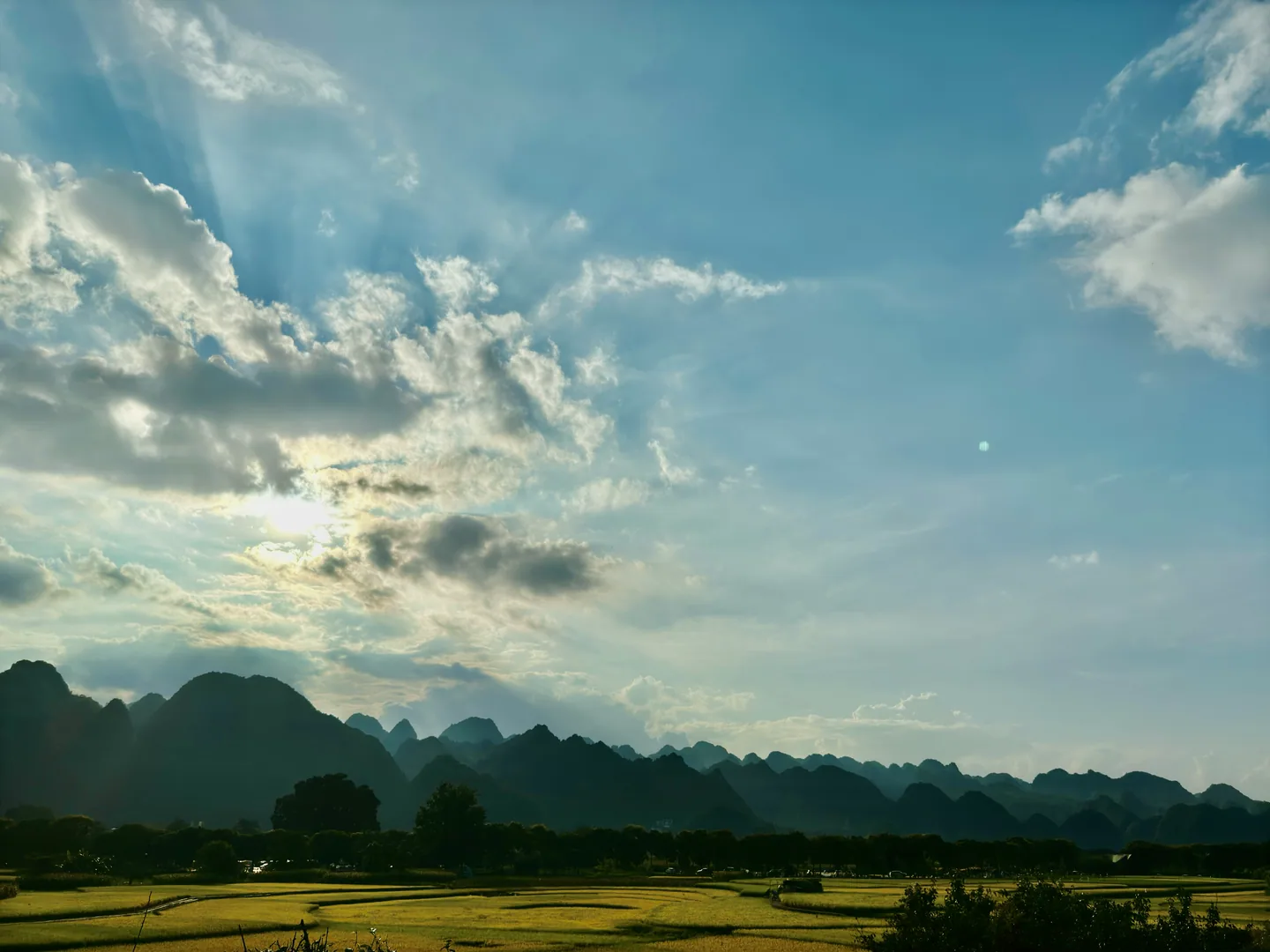
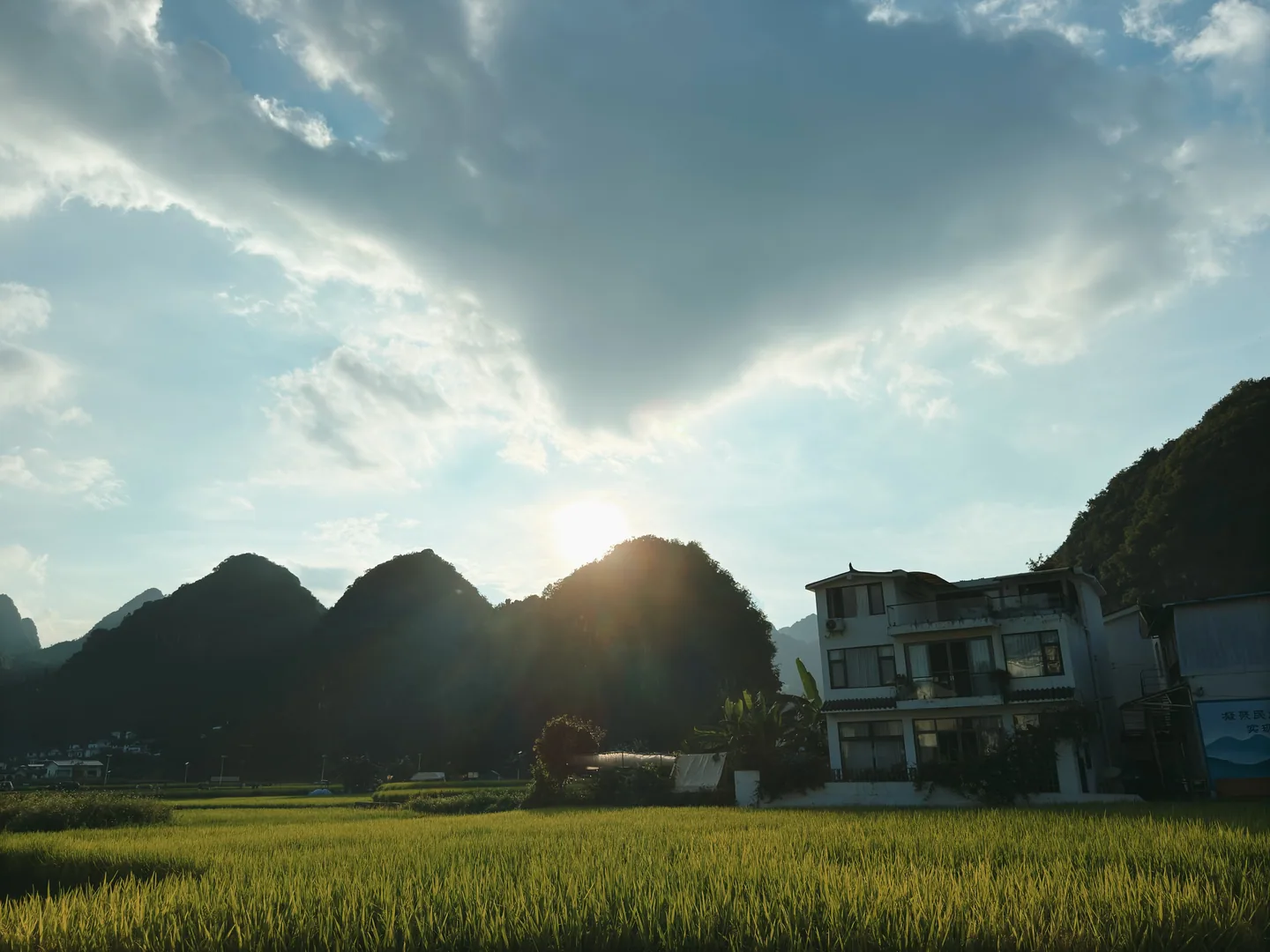
Another view of the fields beneath the clouds
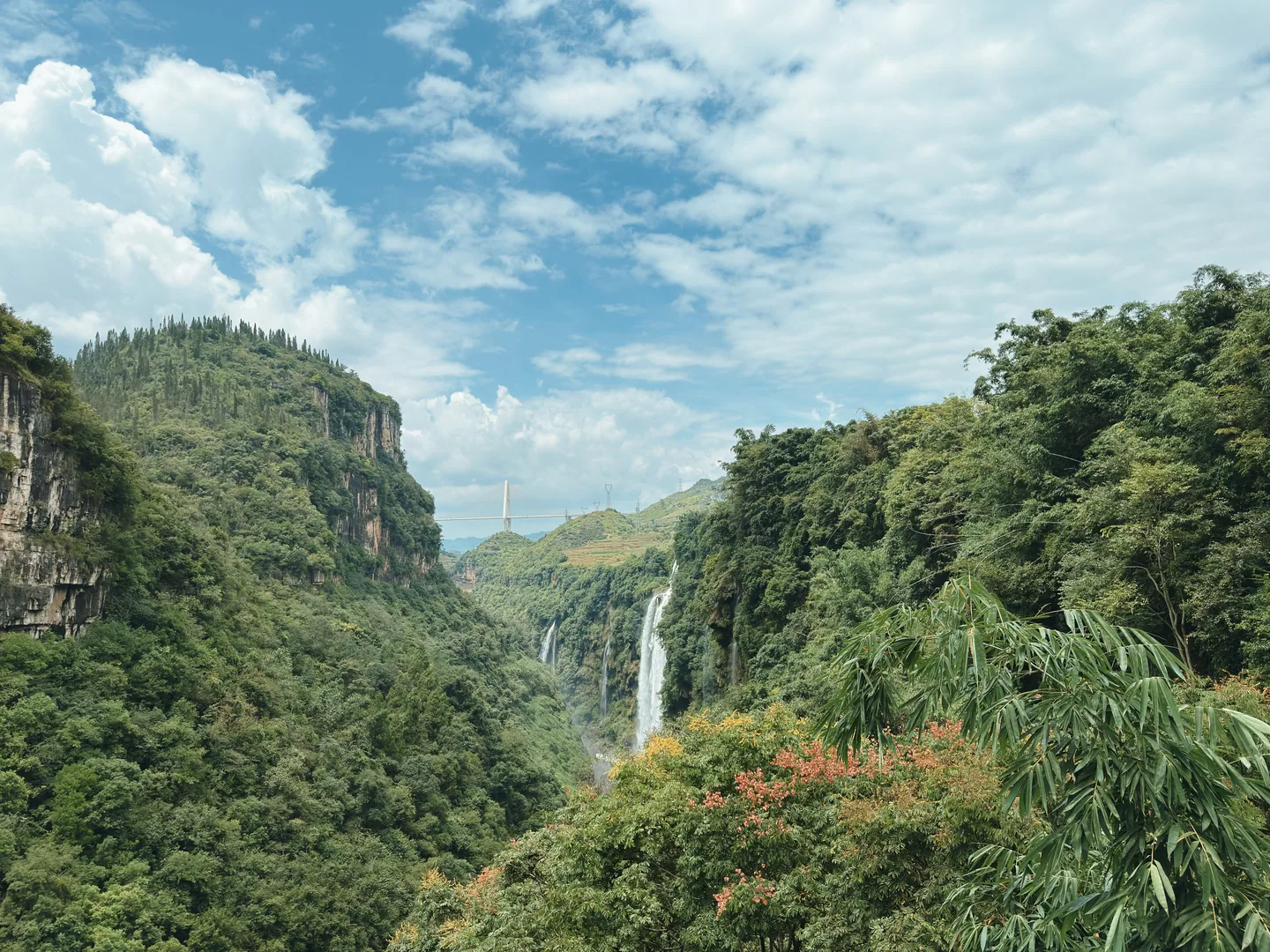
Malinghe Canyon: water far below the cliffs
My other outing was to Malinghe Canyon (马岭河大峡谷), and after the open fields of Wanfenglin, the change was dramatic. The view dropped away between steep green walls, with the river running along the bottom.
What caught my eye was the waterfall, a white stream falling from the cliff, past the plants clinging to the rock, into blue-green water below. Wanfenglin had me looking across the landscape; Malinghe had me looking down into it.
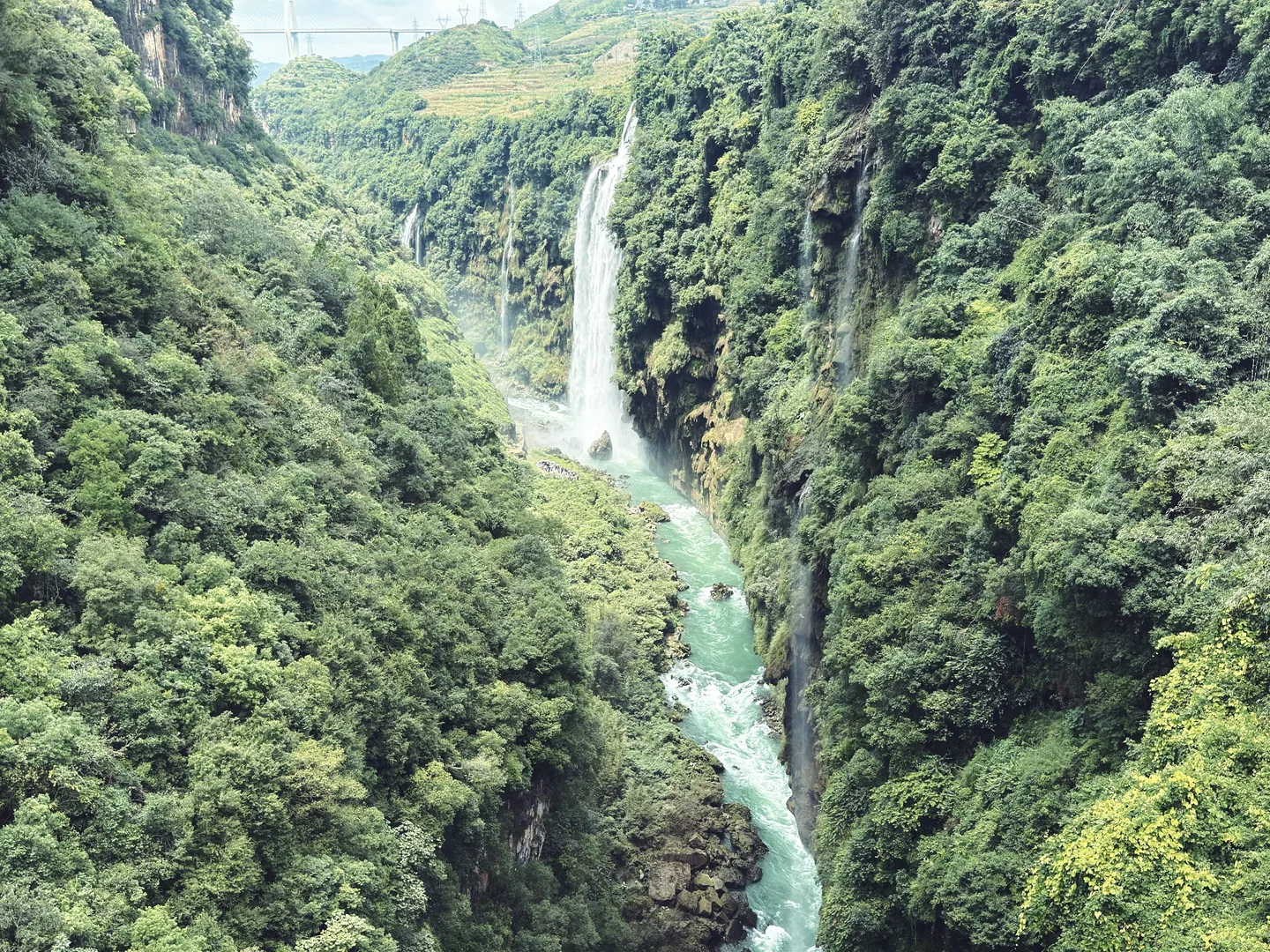
Water is always a reason for me to stop, and after all those weeks by a calm lake, it was good to see it moving like this.
A little tie-dye, and the fried rice I missed
Between the big views, I also stopped at a tie-dye workshop, where everyone gathered around a wooden table as the blue-and-white cloth was opened out to reveal the patterns.
Food left me with a regret instead: I skipped the local egg fried rice. I heard about it and thought, “Egg fried rice? How special can that be?” So I didn’t order it.
Big mistake. Wanfenglin’s version is a local speciality, made with steamed rice, corn rice and eggs, according to the provincial tourism department. I’d judged it by its name.
So I can’t tell you how it tastes. But if you go, order it, even if it sounds ordinary.
A few things I would keep in mind for another visit
Choose your time carefully if you’re going into the villages. Cars can use permitted village roads, but weekends and public holidays can bring very heavy congestion. If it is busy, I would leave the car parked and rent an electric scooter for roads where it is allowed. The view deserves better than spending the outing stuck in traffic.
That does not mean every path is open to scooters. The operator’s Nahui River corridor notice restricts outside vehicles, including electric scooters, on designated stretches. Follow the signs and any temporary traffic arrangements; the village roads and sightseeing lanes have different rules.
For the rice-field scenery I loved, I would think about summer and the period before the autumn harvest. Once the rice is cut, the fields look quite different. That doesn’t make other seasons a waste: from winter into early spring, there’s a rapeseed-flower season, described in the Ministry of Culture and Tourism’s Wanfenglin route. Ask locally about the crop and its timing if a particular field colour is your reason for coming.
Leave time for the water if that interests you. There are paddleboarding and river trips around Xingyi, but I ran out of time, so I can’t recommend a particular one.
Three days was nothing compared with two months at Fuxian Lake, but those fields and mountains have stayed with me. If I go back, I’d like more time among the villages, and this time I’ll order the egg fried rice.
About this note
This note draws on my own travels and photographs and videos.
- National Ethnic Affairs Commission: Xingyi and its location
- UNESCO: Xingyi Global Geopark
- Guizhou culture and tourism department: Wanfenglin and its fried rice
- Guizhou broadcaster: Xu Xiake and the history of Xingyi’s peaks
- Ministry of Culture and Tourism: Wanfenglin’s rapeseed-flower season
- Wanfenglin operator: Nahui River corridor vehicle restrictions